Electricity, transportation, and air quality are part of many decisions that affect people’s daily lives. But how can we identify the paths that reduce pollution, expand access to energy, and make infrastructure fairer and less harmful to people and the environment?
For 20 years, the Institute for Energy and the Environment (IEMA) has worked to answer these questions through science and data. Founded in 2006 to strengthen the production of independent technical knowledge within civil society, IEMA began with a focus on cities. Today, however, it turns research into public information, tools, and proposals that help address challenges and inform decisions shaping the entire country, including the vast Amazon region.
Explore the initiatives and achievements that have shaped IEMA’s work
1. Turning technical data into public information is one of IEMA’s hallmarks. In 2009, the Institute developed the Qualar system to make air quality data more accessible to the public and specialists. The tool was later donated to São Paulo State Environmental Company (Cetesb).
2. IEMA contributed to the development of National Environment Council (Conama) Resolution No. 418/2009, which established criteria for controlling vehicle emissions. With IEMA’s contribution, Brazil moved directly from Air Pollution Control Program for Motor Vehicles (Proconve) phase P5 to P7, bringing forward the adoption of stricter emission limits for heavy-duty vehicles. In 2022, phase P8 came into effect, further tightening these requirements.
3. Reducing transport-related pollution also means improving how people get around. With this in mind, IEMA produced studies on urban mobility highlighting the importance of public transport and active mobility options, such as cycling, as alternatives to private motorized transport.
The Institute also published analyses assessing the impacts and opportunities of making urban travel less polluting.
4. One way to reduce public transport pollution is to replace older buses with cleaner models. To support this process, IEMA compiled a detailed inventory of emissions from passenger transport in São Paulo and developed the PlanFrota and ReFrota tools for São Paulo Transport S/A (SPTrans). These tools make it possible to simulate fleet renewal scenarios and estimate the effects of operating bus fleets on emissions, respectively.
These tools helped guide the transition to cleaner buses in São Paulo, supporting the city’s efforts to implement its legislation.
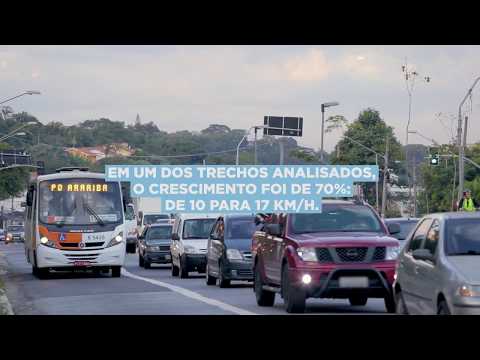
5. In addition to planning fleet renewal, it is important to monitor the results of transport policies. To this end, IEMA created the Monitor de Ônibus SP, a platform that brings together data on bus speeds, fleet size, service capacity, passenger numbers, and pollutant emissions in the city of São Paulo. The Institute also assessed the effects of 64 dedicated bus lanes on travel times and emissions, comparing them with private transport.
Monitoring makes it possible to assess how changes to city streets affect people’s quality of life by reducing time lost in traffic, while also improving bus performance and reducing emissions.
6. Monitoring the socio-environmental impacts of transportation also requires understanding the emissions generated by each mode, particularly to inform public policies aimed at improving quality of life. IEMA was a pioneer in developing national inventories of atmospheric emissions from the transportation sector. In 2011, it published the first National Inventory of Atmospheric Emissions from Road Motor Vehicles, which was updated for the third time in 2025. This was followed by the Freight Rail Transport Inventory in 2012 and the Civil Aviation Inventory, developed in partnership with National Civil Aviation Agency (ANAC), in 2014.
7. In 2013, the Institute expanded its work to include emissions that contribute to global warming. Since then, it has produced annual estimates of greenhouse gas (GHG) emissions from the energy and industrial processes sectors for Greenhouse Gas Emissions Estimation System (SEEG), an initiative of the Climate Observatory. IEMA also developed SEEG Monitor Elétrico, a tool that tracked the composition of Brazil’s electricity mix and its associated emissions on a daily basis.
8. Access to reliable information on air quality in Brazil gained a new resource in 2015 with the creation of the Air Quality Platform. Also maintained and updated by IEMA, the platform aims to make national data available in a standardized format in both Portuguese and English. It has become a national reference and an official source of Brazilian data for the World Health Organization’s (WHO) global air quality database.
9. IEMA also expanded its monitoring of emissions from the electricity sector. Each year, it publishes the Atmospheric Emissions Inventory for Thermal Power Plants, which identifies fossil fuel-fired power plants connected to the National Interconnected System (SIN) and details their emissions by facility, fuel type, and owner. This information helps assess the environmental impacts of these plants and informs planning for a just transition in the sector.
10. Understanding emissions from thermal power plants also helps assess the decisions shaping the future of Brazil’s electricity mix. Through its Electricity Auctions bulletins, IEMA monitors electricity procurement and analyzes the risks of long-term commitments to fossil fuel sources, which can prolong dependence on these fuels. As a founding member of the Clean Energy Coalition, the Institute also contributes to policy coordination and discussions aimed at expanding cleaner energy sources.
11. The energy transition must also ensure that more people have access to electricity. In the Xingu Indigenous Territory, IEMA assessed the feasibility and impacts of photovoltaic solar energy systems installed by the Socioenvironmental Institute (ISA) between 2018 and 2019. The study identified benefits for community energy security.
12. Expanding access requires identifying people who still lack adequate electricity services. In 2021, IEMA developed an innovative georeferenced methodology that identified one million people without access to public electricity services in the Legal Amazon. The assessment provided input for monitoring programs such as Luz para Todos (Light for All) and helped inform discussions in the National Congress on achieving universal access to electricity.
13. Data on the lack of access to electricity also help identify solutions and improve the regulations governing its provision. In this area, IEMA is a co-founder and member of the executive secretariat of the Energy & Communities Network, which brings together civil society organizations and social movements to improve policies aimed at universalizing access to energy.
14. In the Legal Amazon, access to energy is also essential for the economic activities of traditional and extractive communities. IEMA’s Mapping Sociobioeconomy study identified more than 84,000 extractive and community-based establishments without access to electricity. The findings helped inform the National Sociobioeconomy Plan and highlighted the need for solutions tailored to the specific circumstances of these localities.
15. To address the challenge of universal access to electricity, a civil society organization entered into a partnership with the Brazilian Electricity Regulatory Agency (ANEEL) for the first time. Together, they are developing the Energias da Floresta (Forest Energy) Regulatory Sandbox. The initiative tests approaches, validated with local residents, to provide access to public electricity services that are clean, reliable, and of good quality.
16. Transport infrastructure planning must also account for impacts on the environment and local communities. IEMA produces and compiles information to improve decision-making on transport infrastructure in Brazil, promoting compliance with best technical practices, transparency, and public oversight. The Institute has also worked with government ministries, the Federal Court of Accounts (TCU), and the Office of the Comptroller General (CGU) to strengthen the integration of socio-environmental criteria and public participation into transport planning in the region. In addition, it provides training for social movements and civil society organizations to help them monitor public decisions.
Infrastructure in the Amazon must be developed for the region, not merely built within it.
17. This concern also guides IEMA’s work monitoring, evaluating, and proposing improvements to the implementation of the Integrated Transport Planning (PIT) at the federal level, as established by Decree No. 12,022/2024. In 2025, the Institute launched an interactive map of transport infrastructure projects in the Amazon, bringing together public data on projects across the region. The tool makes information more accessible and enables the public to monitor projects and their potential impacts. IEMA also played an active role in ensuring that socio-biodiversity and socio-environmental criteria were incorporated into the National Logistics Plan 2050 (PNL 2050) for the first time.
18. Expanding biofuel production without driving deforestation or compromising food production is one of the challenges of Brazil’s energy transition. To explore possible pathways, IEMA published a study, with contributions from the Climate Observatory, on the potential for bioenergy expansion through 2050. The analysis indicates that production and consumption could more than double by using degraded pastures to grow feedstocks, aligning the energy transition with environmental restoration.
19. Assessing opportunities to reduce emissions across different sectors is essential for planning the future. To this end, IEMA is part of NetZero Brasil, an international platform that integrates energy, transport, industry, and land-use models to develop and compare decarbonization scenarios. These simulations make it possible to assess how measures such as ending deforestation, restoring forests, and integrating public policies across sectors can help reduce emissions and increase carbon removal from the atmosphere.
20. IEMA’s work also extends to international cooperation. Since 2014, the Institute has been part of the Climate and Clean Air Coalition (CCAC), an international initiative linked to the United Nations (UN) dedicated to reducing short-lived climate pollutants. It also participates in Latin American networks, such as Latin American Clean Air Coalition (Coalición ALAire), and contributes to discussions at the Conferences of the Parties (COPs) and in international technical forums. In these spaces, IEMA shares research and data produced in Brazil to support efforts to tackle air pollution and climate change.